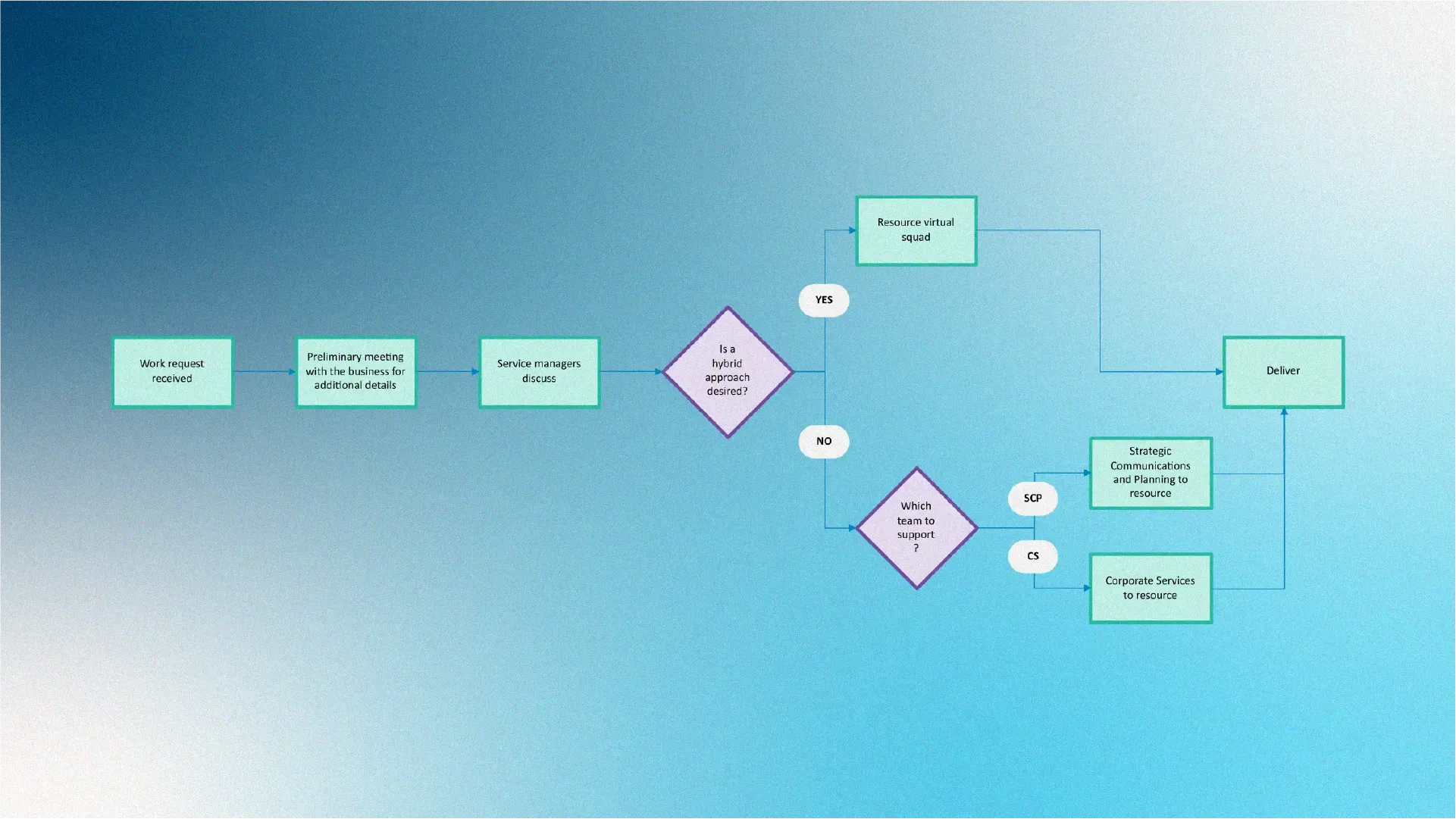
Web services
Defining an internal web service
My role
Service Designer leading the engagement from discovery through to design and delivery of the service. This involved conducting research, producing design artefacts, and leading stakeholder engagement.
Project overview
Improving the internal capability of teams to support the delivery of web services. This involved working with teams across the business and vendors to understand the current state and desired future state of web services in the organisation.

Approach
Research was conducted with the fruit growing community and companies that provided fertiliser related services. The project team split into pairs to conduct interviews and captured notes in a shared file. The team worked together to synthesize findings by grouping key concepts into themes. Insights were used to produce a journey map of the fertiliser life cycle to highlight current pain points. This was presented back to stakeholders to highlight the challenges faced by the growing community.
We worked as a project team to define where we should focus our effort to have the most impact on the current pain points. Through this process we decided to focus on standardising fertiliser recommendations and supporting data flow between companies and growers. We developed storyboards for potential solutions and workshopped the concepts with the growing community. Through this process, we were able to refine our designs for further user testing.
We developed a low fidelity data collection tool in the form of a spreadsheet to test with the growing community. This was done primarily to understand if the data would flow correctly between the various touch points. Through this process we refined our design until we had an MVP. The requirements were then captured as user stories ready for development.
Outcomes
The project identified how fertiliser management could be improved across the growing community and the findings resonated with stakeholders who had visibility of the work.
The MVP was left in a technically viable state, ready to be progressed as part of future development.
With changes to environmental regulations around agricultural emissions on the horizon, the project positioned the organisation to respond proactively rather than reactively when new requirements take effect.
Challenges
Scaling research - Due to the scale of the research it was difficult to ensure consistency of user interviews. This created variance in the length of the interviews and the level of detail in the notes. The process of synthesizing the interviews into themed insights was also more time consuming than anticipated.
Stakeholder alignment - Designing for the community was challenging as each group operated independently in the life cycle and had different motivations. The design needed to be effective in addressing the pain points but there also needed to be an incentive for each party to adopt the proposed solution.
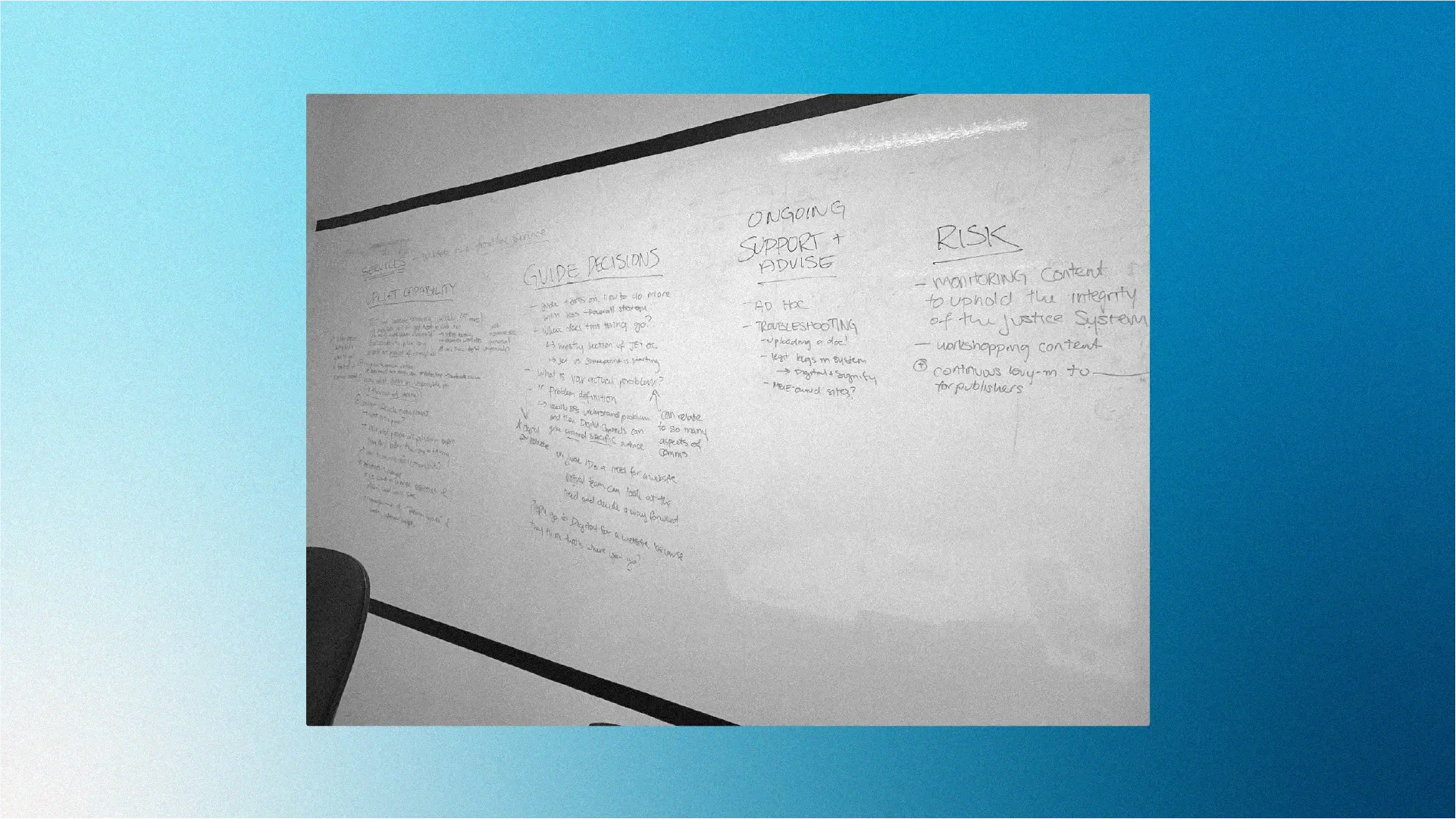
Workshopping the future state
We ran workshops to discuss how the service could be managed collaboratively at a high level. Each section was populated by the relevant teams and agree upon as a group. This was refined and agreed upon by our stakeholders.
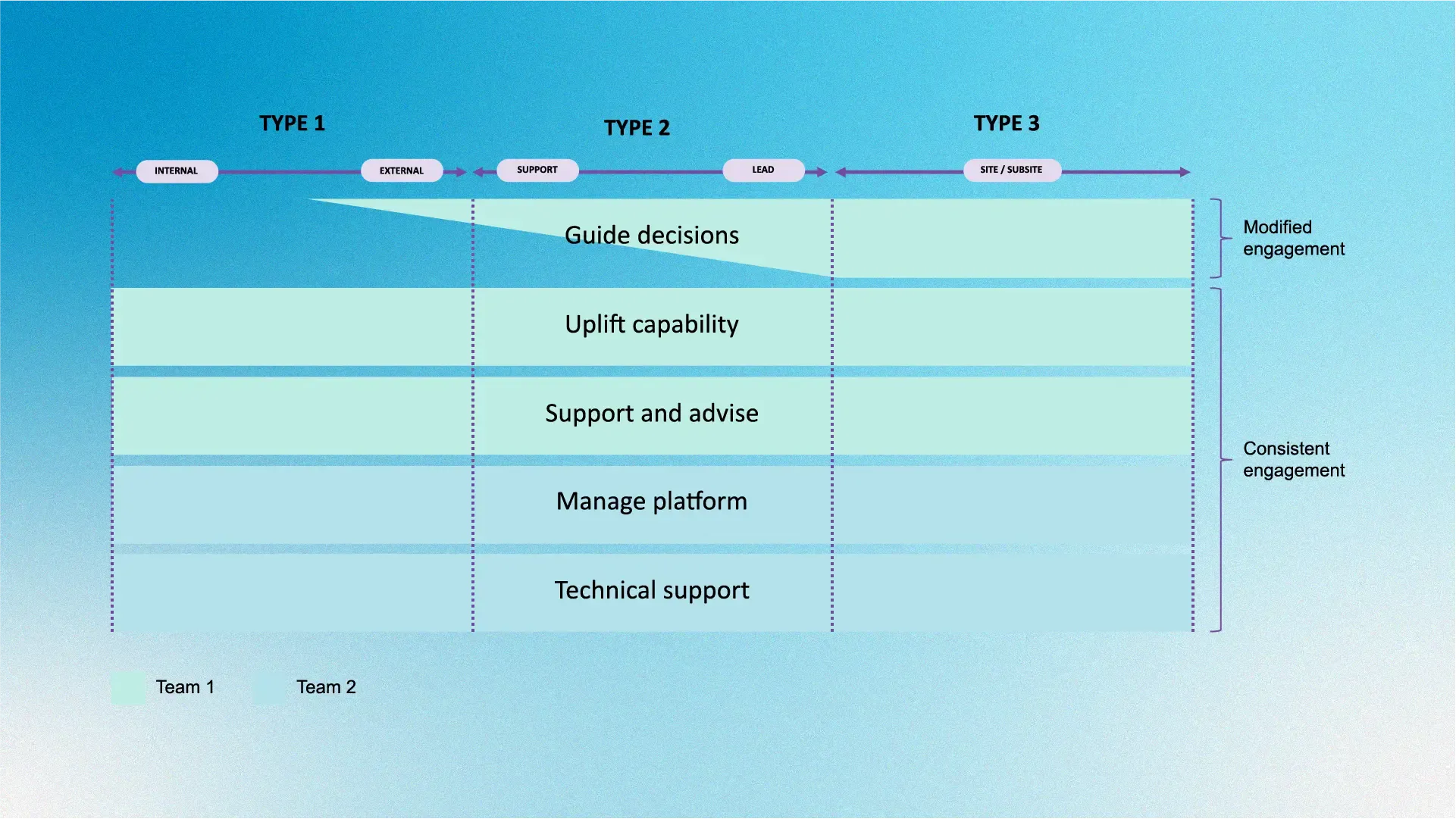
Defining roles and responsibilities
The roles and responsibilities of each team across differing types of web work were co-designed and agreed upon. This high-level artefact was supported by a RASCI detailing the individual role responsibilities.
Agreeing on how we work
A working agreement was created to capture how decisions could be made for future work. This document detailed where agreement between teams was required to progress work and how key decisions could be made.