Export certification
Digital assurance for product export
My role
UX / UI Designer in a cross-functional team that broke down the existing product to understand the workflows. I worked closely with our Developers and platform experts to design workflows that showcased technology capabilities.
Project overview
A proof of concept for a digital system that would enable the export of animal products from New Zealand. An existing legacy system was being decommissioned as a lack of integration functionality was limiting NZ businesses.
Approach
Research was conducted to understand the existing system; this was achieved through mapping out existing processes based on supporting materials for the system.
One of the key goals of the project was to showcase the tech-stack our team was looking to leverage. One component of this was attempting to use AWS Amplify to streamline the design and development process. As this tech-stack component was a major part of the strategy I was regularly involved in discussions surrounding the products selected in order to ensure our designs were aligned to the overall vision.
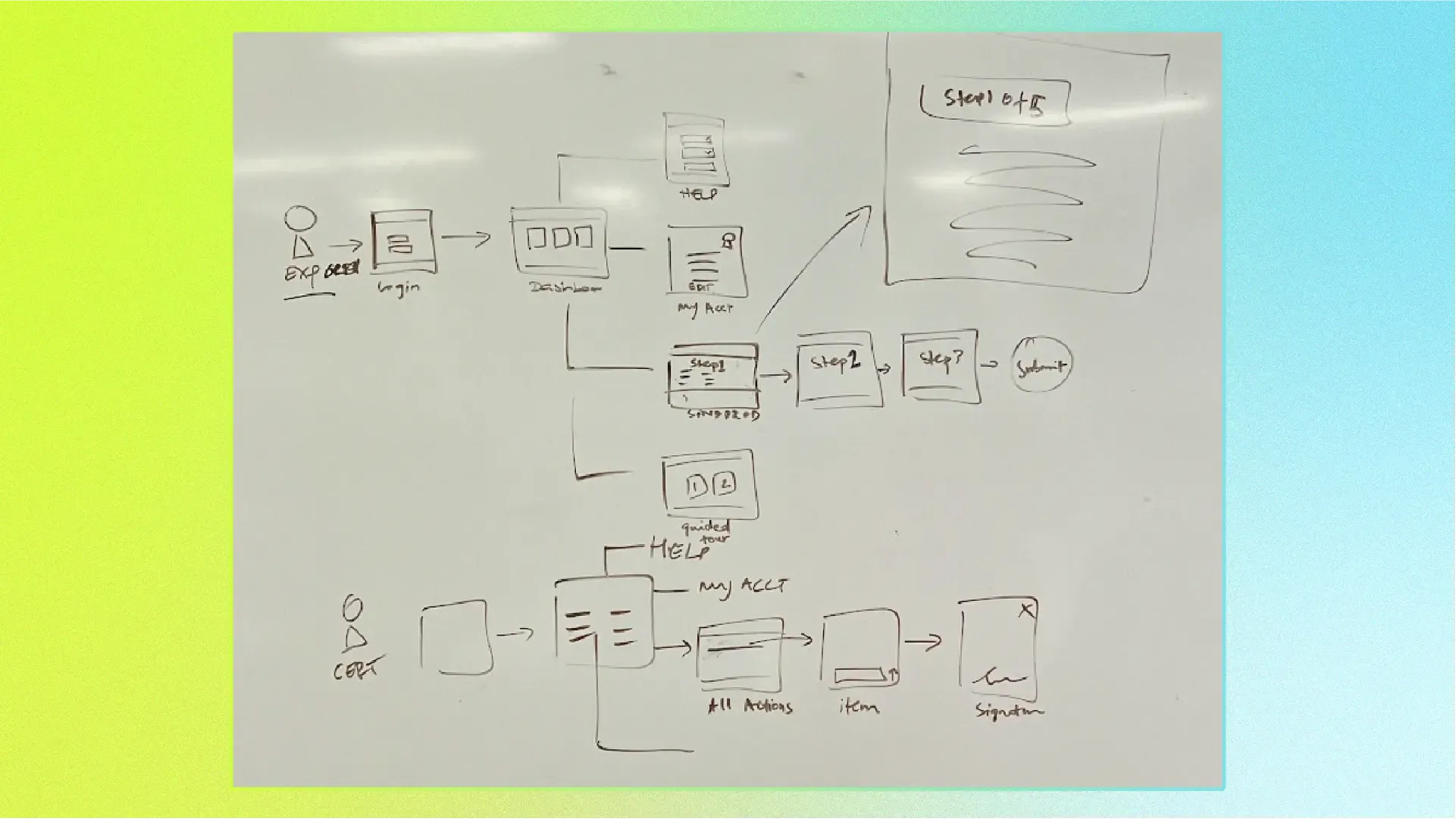
Low fidelity screen flows were created to support conversations between the Product Owner, tech teams, and design team. These screen flows enabled us to align our approach and test thinking in the early stages of the design process. The low fidelity artefacts enabled the wider tech team to challenge the thinking/approach.
A design system was derived from the client’s website. The access to a design system enabled me and another UX/UI Designer to collaborate effectively when working on different aspects of the project.
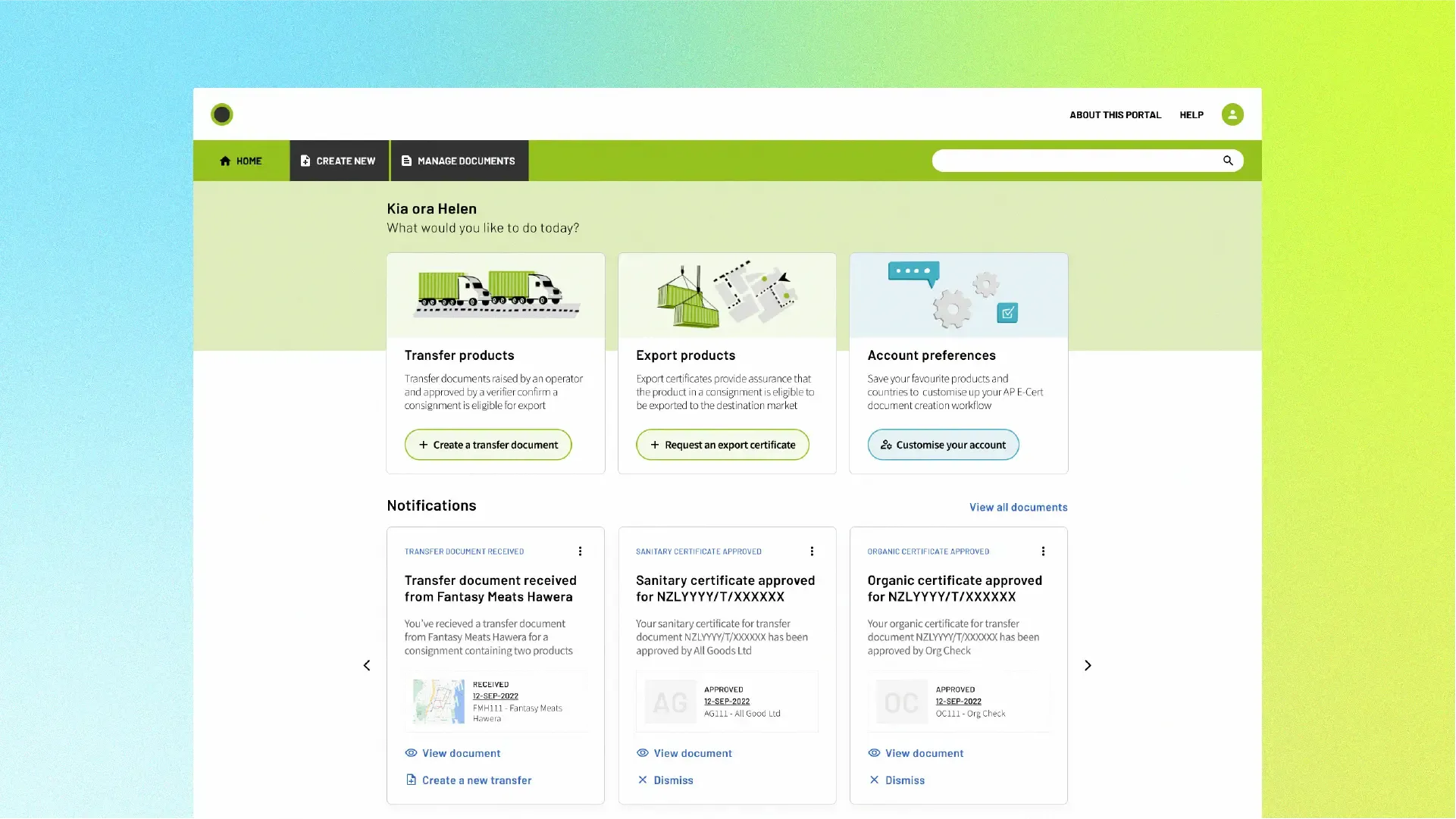
A key deliverable was the detailed design of two key processes that our solution was to showcase. This involved working closely with our Developers to ensure our designs were feasible to produce in the systems/products they were using.
The final showcase of our product was a combination of an interactive Figma prototype and live operational system.
Outcomes
The proof of concept successfully showcased our design thinking and technical capability in a competitive environment against other agencies.
The demo brought a key export certification workflow to life, and the engagement resulted in winning a multi-year project that is currently ongoing — with significant implications for New Zealand exporters.
Challenges
The focus on trying to leverage AWS Amplify created challenges early in the project. It was unclear if the constraints of the framework were worth the anticipated benefits. After trialling the framework it became clear that the constraints were presenting more challenges than anticipated so we agreed as a team to develop a custom solution. This would enable more flexibility in the design of the solution and enable the Developers to work to their strengths.
Early design integration
The initial planning phase of the project was a true highlight as the technology team brought the design team into the project at the beginning. This enabled us to plan holistically and discuss how to sequence the project deliverables.
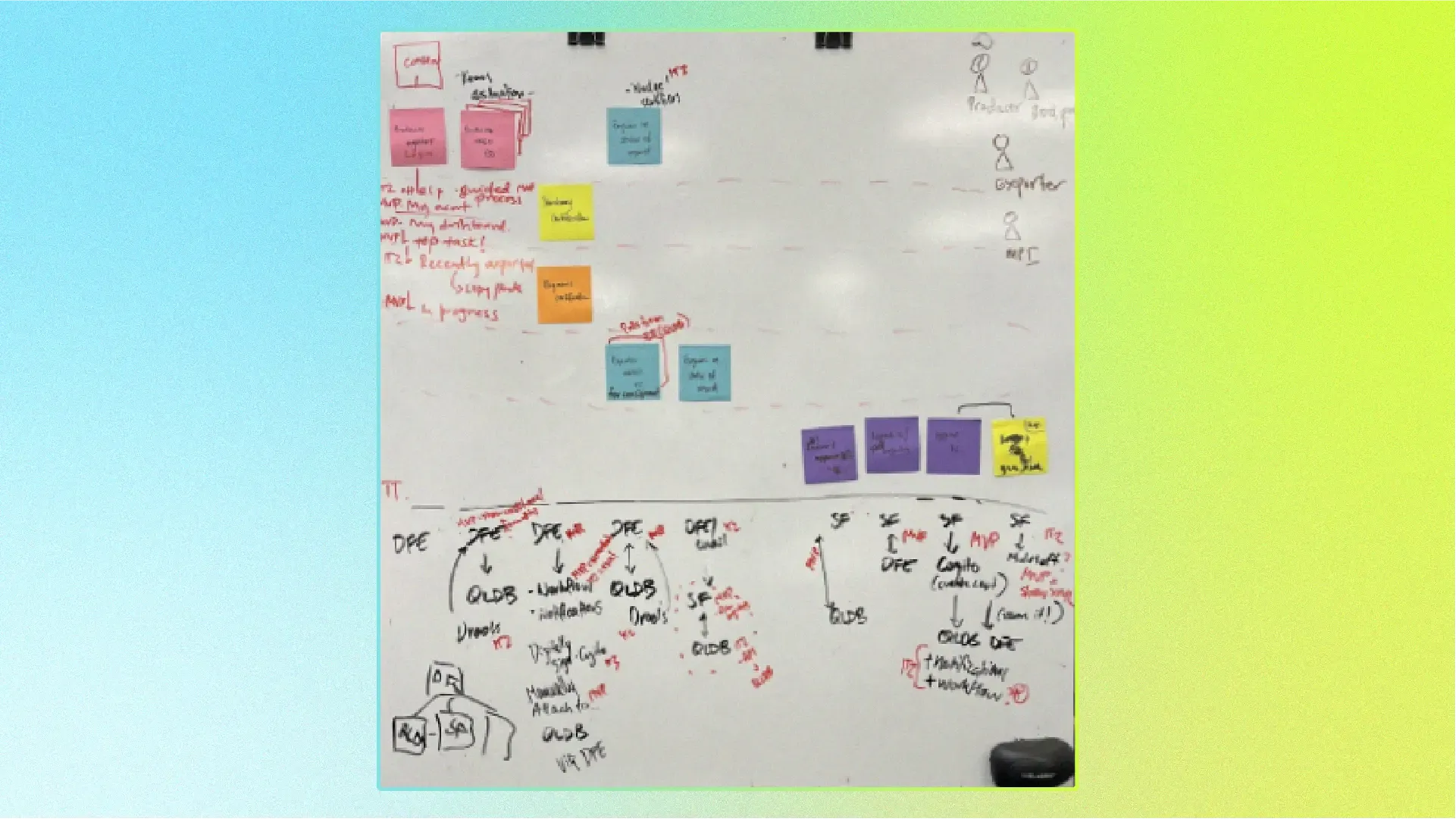
Collaborative whiteboarding
Low fidelity screen flows early in the project enabled teams to come together and bring their perspective on proposed workflow. Since the screen flows were rough sketches this invited the wider team to sketch out ideas rather than just the Designers.
Displaying data from integrations
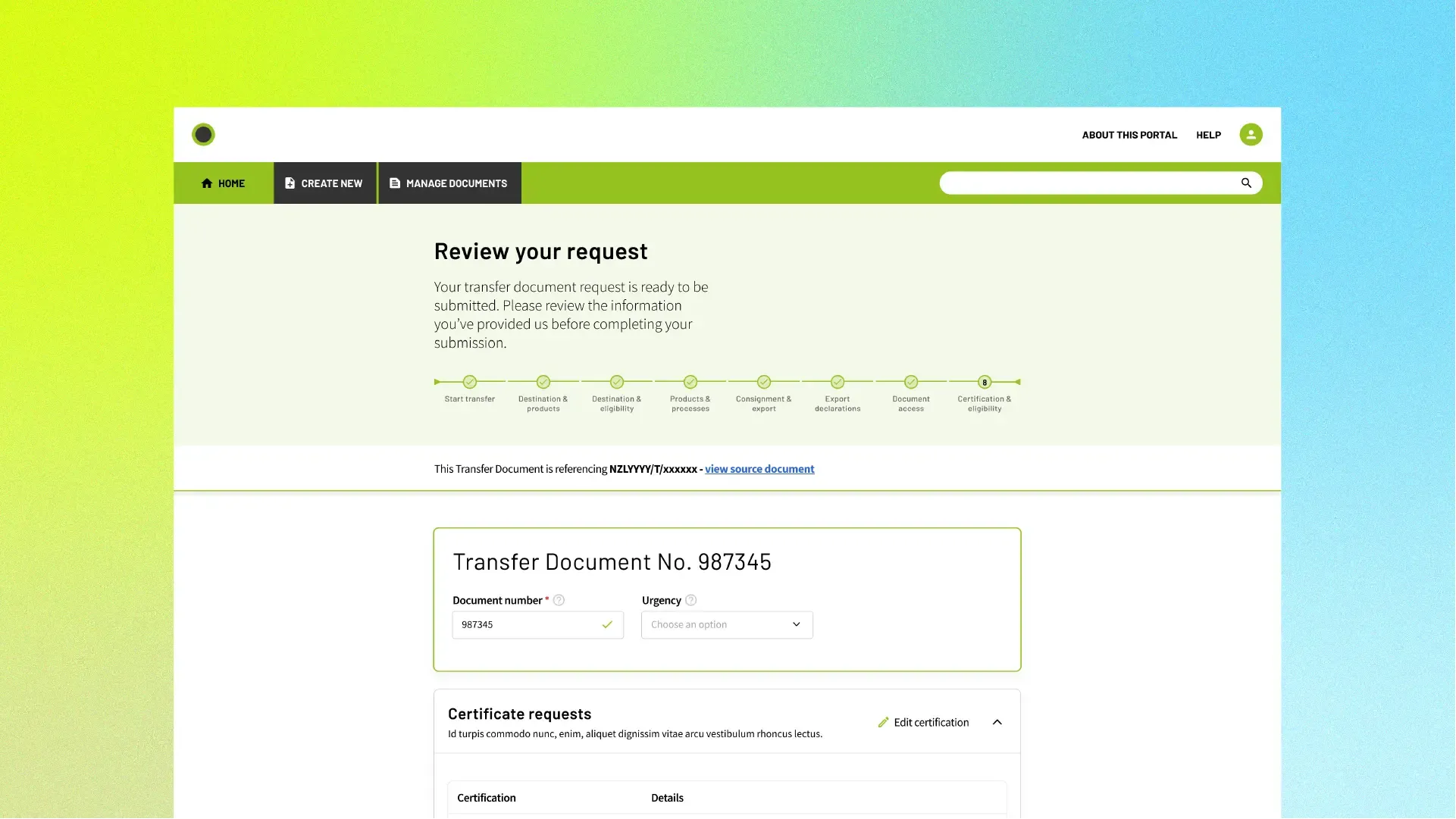
An important feature of our proof of concept was to showcase the ability to capture and display information from a range of systems. A key design challenge was finding a way to enable users to access/review information throughout the certification process.
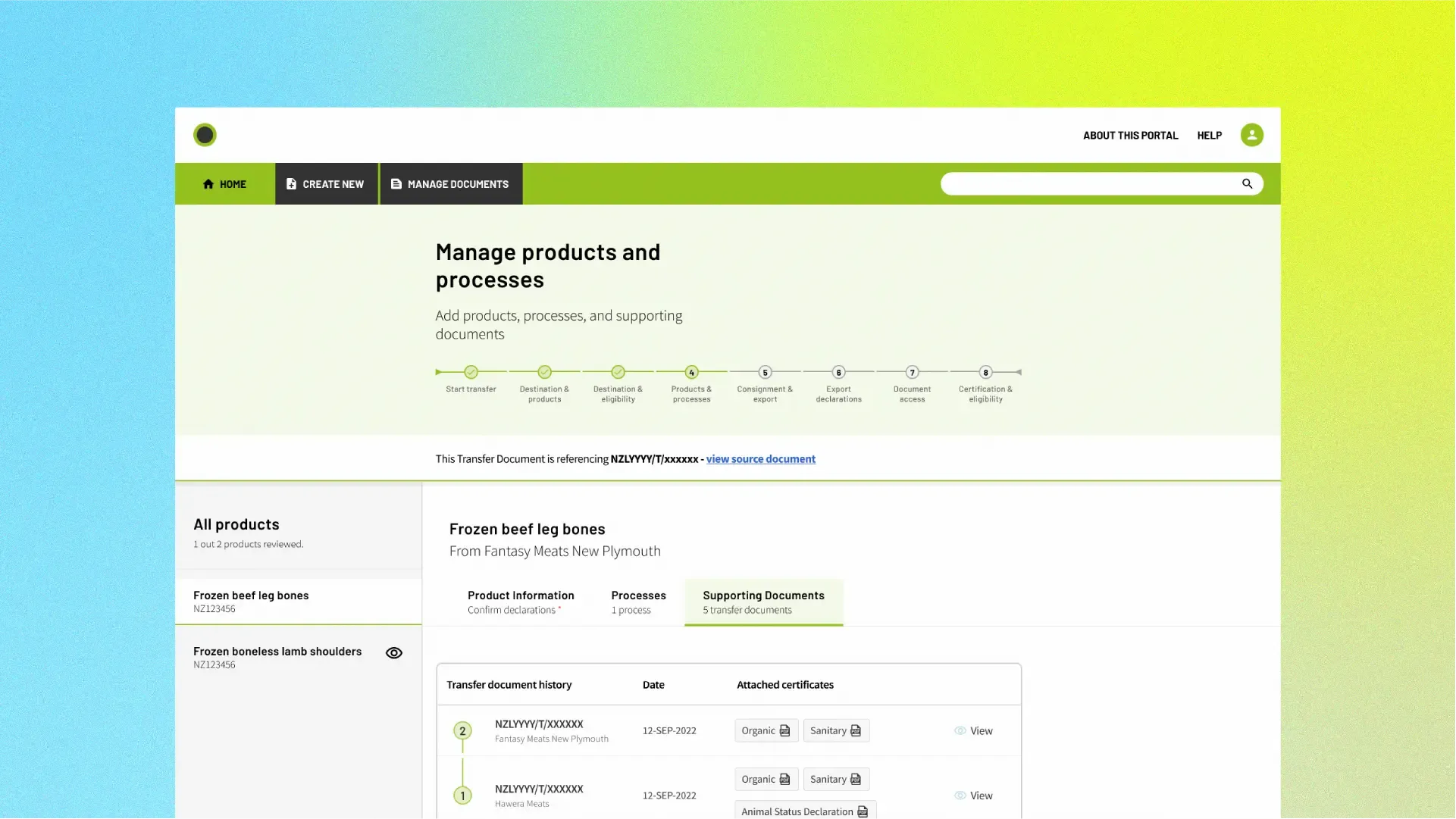
Managing cognitive load
Another key design challenge was exploring how detailed information could be displayed and edited throughout the export certification process. A highlight was our 'review' page where a user was presented with all the inputted information in a condensed summary.